Enter the constraints
Required storage, available footprint, outlet depth, proposed cover and surface load.
Stormwater tanksRequest a quoteEngineered underground storage
Complete modular detention, retention and infiltration systems for Australian projects from approximately 100 m³.


Build the tank. Then verify the quote.
A project-led quote workflow
The module is only one part of a dependable underground tank. We configure the storage volume, footprint, depth, load basis, wrapping and penetrations before calculating and checking the complete project supply.
Required storage, available footprint, outlet depth, proposed cover and surface load.
Module count, tank dimensions, layers, net capacity and preliminary wrapping quantities.
Kontain checks current costs and technical interfaces, confirms the project by phone and then issues the formal quote.
One module. Three system outcomes.
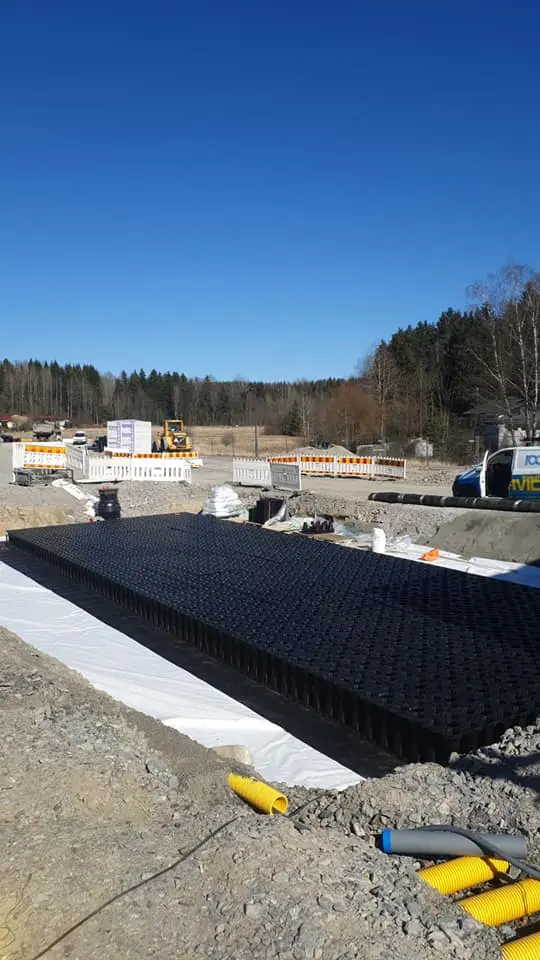
Kontain supplies the M2025 crate assembly with the containment or filtration envelope and project-specific pipe penetrations—not a loose pallet of modules.
Impermeable liner and protective geotextile for controlled storage and discharge.
Typical purposePeak-flow control and downstream capacity management.Permeable geotextile envelope where verified soil and groundwater conditions permit infiltration.
Typical purposeSource control and groundwater recharge.Prefabricated liner, protection layers and formed pipe boots for non-potable reuse systems.
Typical purposeIrrigation, wash-down or process reuse with suitable treatment.M2025 product platform
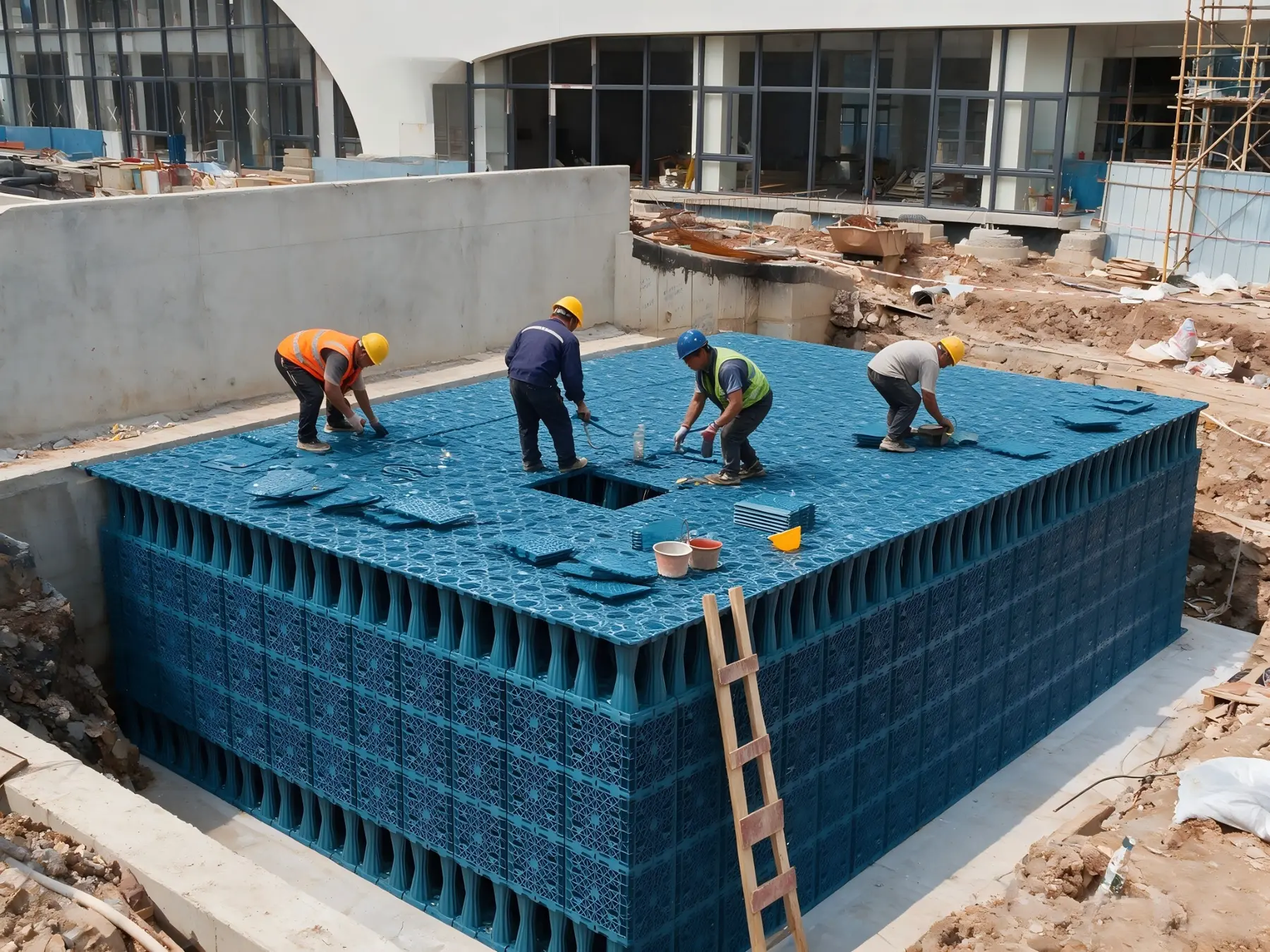
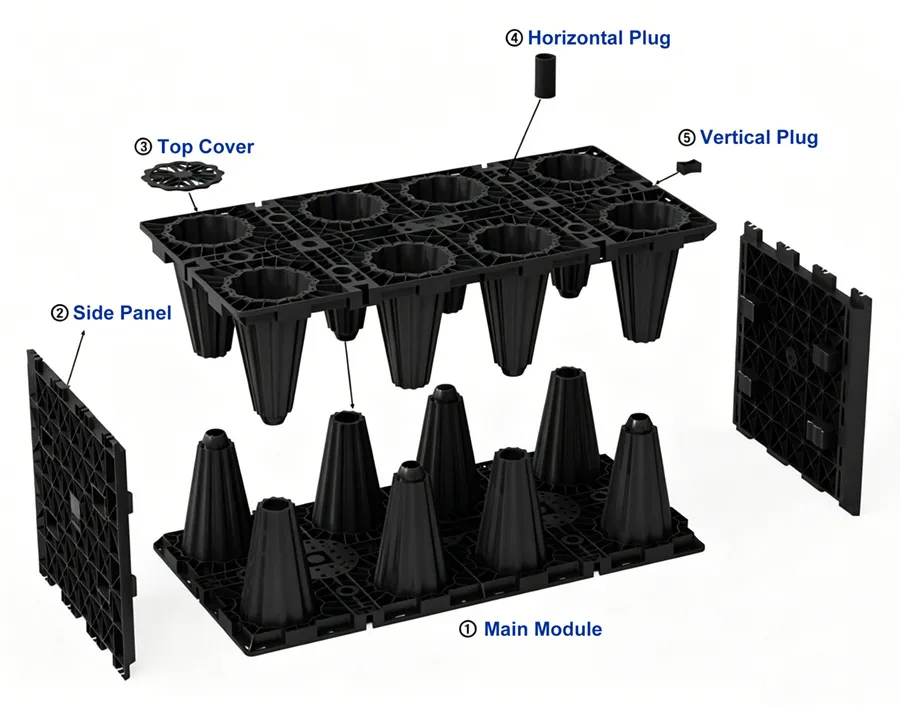
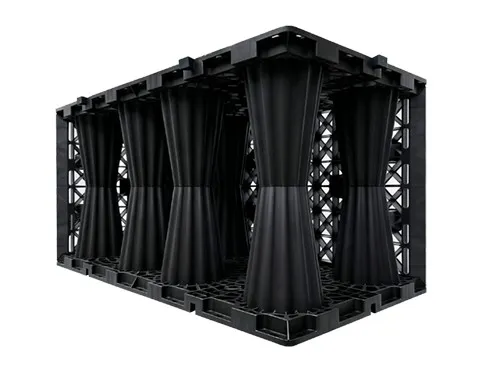
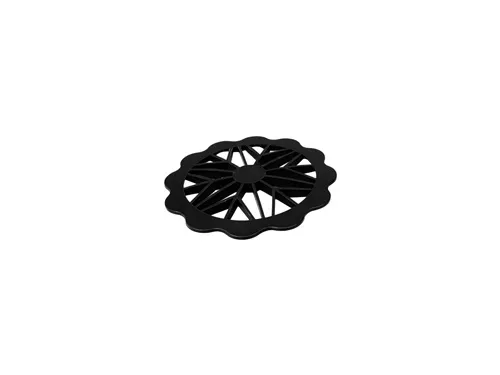
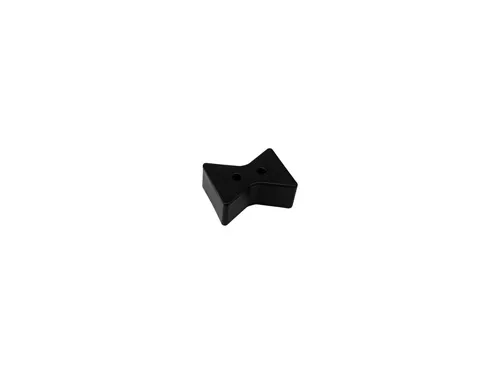
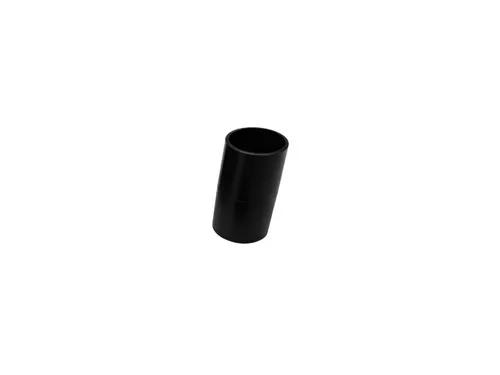
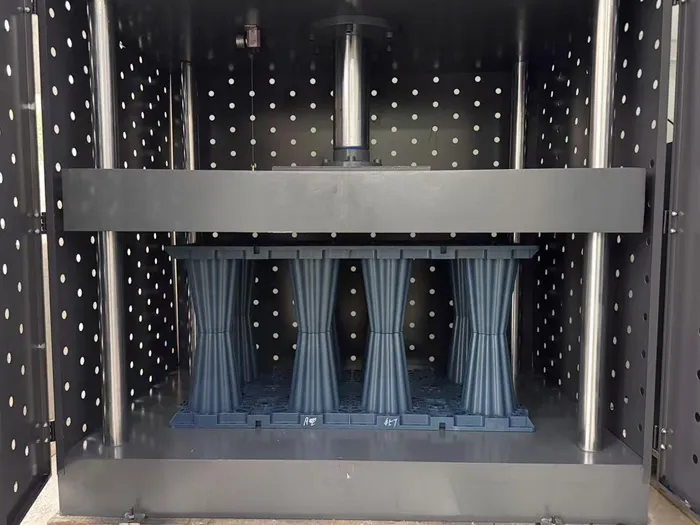
The assembled module uses opposing structural plates, side panels, top covers and keyed plugs to create a continuous geocellular tank. The modular geometry gives the layout engine a fixed basis for length, width, layers and accessory take-off.


Material and strength options
Polymer grade and published strength class are confirmed against the project load case. Colour is not used as the sole acceptance control; procurement records and batch documentation are required.

Manufacturer-published 45 t/m² class. Feedstock source and equivalent independent structural evidence have not yet been supplied to Kontain.

Manufacturer-published 60 t/m² class. Feedstock source and equivalent independent structural evidence have not yet been supplied to Kontain.

3248R (RP250NQ) virgin PP from Fujian Refining & Petrochemical. Current Intertek evidence applies only to the tested virgin specimen and configuration.
Complete system schedule

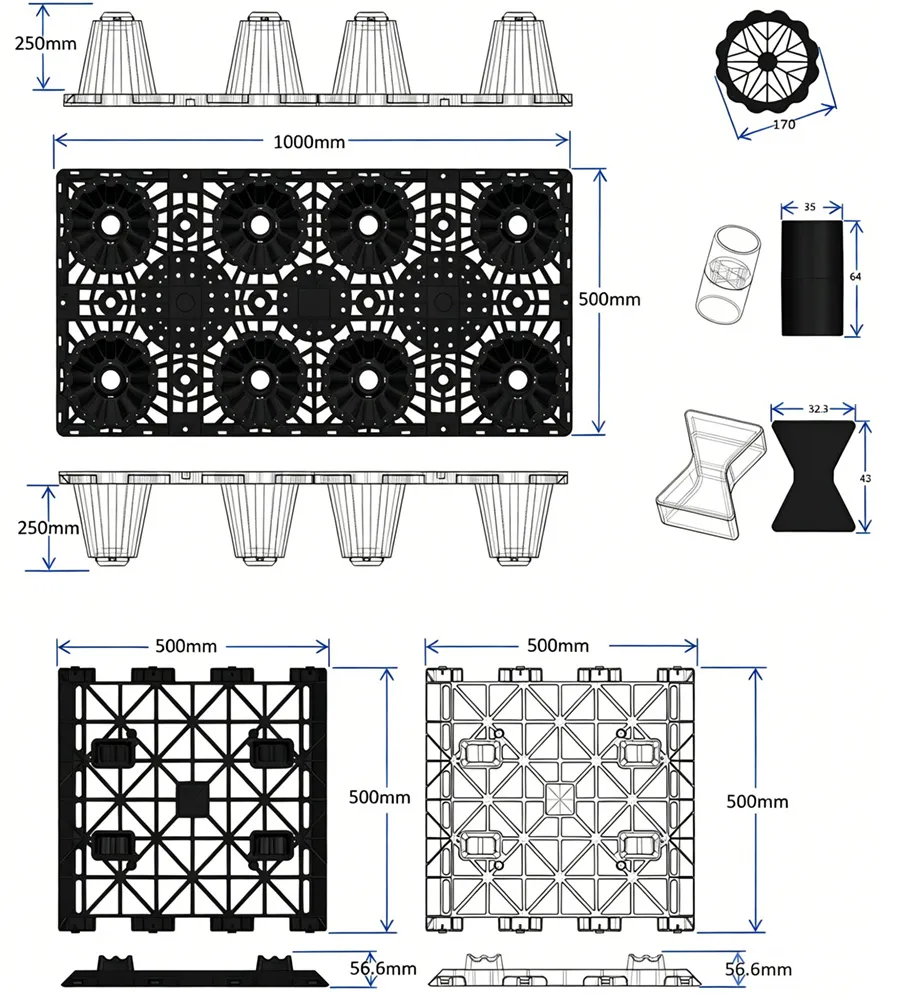
Four 500 × 500 mm pieces cover each square metre of exposed vertical tank face.

Top layer only: eight covers per module, equivalent to 16 covers per square metre of roof.

Four per module at every stacked interface; no vertical plugs are installed above the top layer.

Three per module on every layer to key adjacent modules across the tank plan.
Worked component example
Three module layers with 200 modules per layer. The 60 m² of exposed vertical side area requires four side plates per square metre.
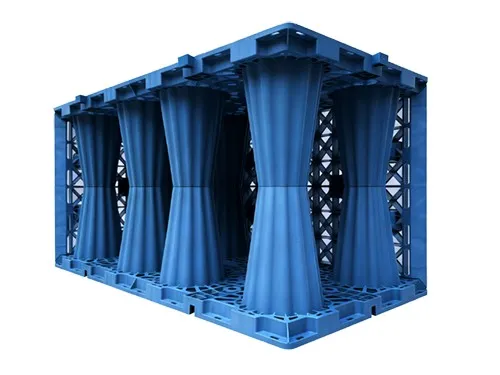
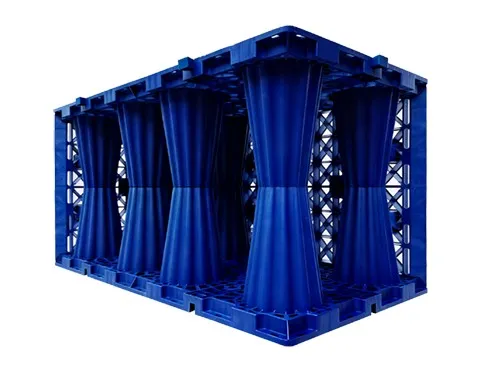
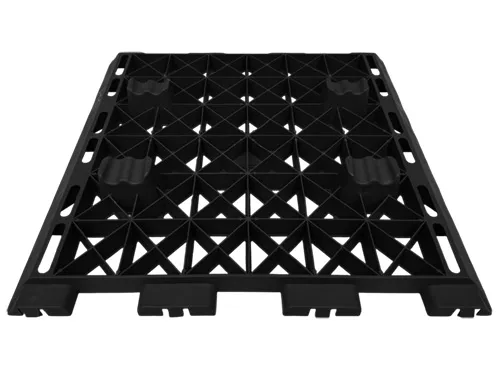
Product and component imagery supplied by the M2025 manufacturer.
Controlled installation guidance
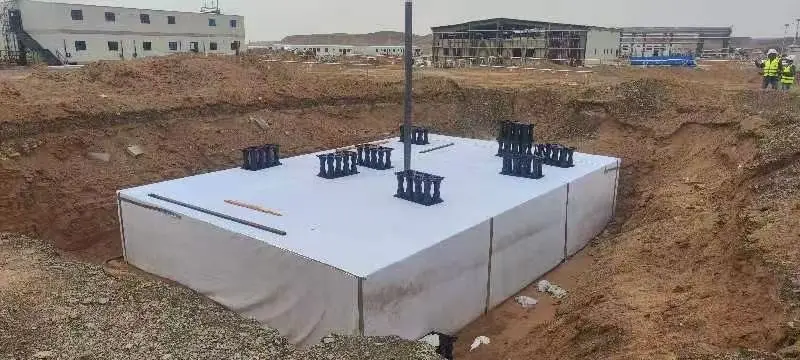
The Rev 08 M2025 guide turns the system into a practical set of responsibilities, hold points and inspection records. It covers soakage, lined attenuation and harvesting systems without replacing the approved drawings, geotechnical advice or the engineer's project-specific design.
Confirm current underground-services information, tank set-out, formation, groundwater and a safe excavation method. Benching, battering or shoring must follow the competent person's assessment and applicable WHS requirements.
Use a permeable nonwoven wrap for approved soakage systems, or a protected LLDPE liner for detention and harvesting. Liner panels, seams and pipe boots are coordinated before concealment.
Verify formation level and planarity, enclosure condition, aligned module columns, all scheduled plugs, perimeter panels, top covers and pipe interfaces before closing the system.
Place compatible material symmetrically in controlled lifts. Observe compactor and plant restrictions, flush upstream pipework, inspect the control system and complete the handover records before operation.
For attenuation systems, the external flow-control pit should extend to finished surface with its lid at ground level. Keep the low-level outlet at the tank base and use an engineer-sized, accessible flow-control device.
Do not enter the module tank. Inspection and maintenance are carried out through the designed pits, pipework and accessible external components.
Compression and 30-day creep results apply to the tested virgin V60 specimens and configurations—not to recycled variants, allowable traffic loads, a design life or construction-plant approval.
Preliminary design calculator
This tool uses a conservative 0.23 m³ net storage per M2025 module. It rounds the result to complete rectangular module rows and layers.
Submit the configured tank for review
The generated brief provides the quantities and project location needed to check current part rates, liner fabrication, overseas freight, Australian customs and clearance, and metro delivery. Kontain will call before issuing the formal quote.
Preliminary planning output only—not a certified design, drainage calculation, structural design or construction document. Final configuration depends on project drawings, geotechnical conditions, groundwater, construction loading, pipework and authority requirements.
Technical basis
A published short-term compression value is not proof that a tank can be placed beneath traffic. Cover, backfill stiffness, wheel load distribution, groundwater, lateral pressure, construction plant and long-term creep all affect suitability.

Independent laboratory report reviewed
Applicant-supplied virgin V60 samples measuring 1,000 × 500 × 500 mm were tested under a rigid full-surface platen at 20 mm/min. The Intertek report records the method as CIRIA C737-2016 plus client requirements; this is not CIRIA certification or approval.
Results apply only to the tested virgin V60 specimens and reported configurations; supplier batch traceability to current production remains a project acceptance item.
Top loading excluded lateral plates; the lateral surface test included the side plates.
The non-failure result means the short-term tested-sample resistance was greater than the equipment limit. It does not quantify ultimate strength or allowable design resistance.
The report is a performance test, not Intertek product certification, CIRIA approval or proof of 50-year strength.
| Variant | Material / resin source | Nominal module mass | Published class | Current evidence boundary |
|---|---|---|---|---|
| V60 | Virgin 3248R (RP250NQ) random-copolymer PP from Fujian Refining & Petrochemical; manufacturer-declared glass-fibre/additive system. | 12.6 kg | 60 t/m² | Intertek short-term compression and 30-day creep evidence applies only to the tested virgin specimen/configuration. The tonne class and >600 kPa lower bound are not allowable project loads. |
| R60 | Recycled PP; feedstock origin, recycled-content controls, contamination limits and final compound properties not documented in the current evidence pack. | 13.0 kg | 60 t/m² | No equivalent variant-specific independent compression or creep evidence supplied to Kontain. V60 evidence is not transferred. |
| R45 | Recycled PP; feedstock origin, recycled-content controls, contamination limits and final compound properties not documented in the current evidence pack. | 11.0 kg | 45 t/m² | No equivalent variant-specific independent compression or creep evidence supplied to Kontain. V60 evidence is not transferred. |
| All variants | 1,000 × 500 × 500 mm nominal assembled geometry | Manufacturer-quoted nominal masses | Product designations only | Final cover, traffic, tank height, pavement, soil, construction loads, groundwater and allowable deformation require project-specific verification. |
Review creep test duration, extrapolation method, temperature basis, safety factors and allowable strain.
Check founding stiffness, backfill grading and compaction, groundwater and construction-stage stability.
Model cover depth, wheel and axle loads, dynamic effects, pavement build-up and adjacent structures.
Detail liner, geotextile protection, welded seams, pipe boots, access, vents and maintenance.
Product classes and masses are manufacturer-published values. Compression results are summarised from report 260304095GZU-001 and apply only to the tested virgin V60 specimens and stated conditions. The result stopped at the equipment limit rather than failure, so it establishes a lower bound only. The complete report is available for qualified project review subject to distribution permissions.
Quote verification workflow
Configured tank, module count and accessory schedule
Client inputsCurrent components, ocean freight, customs and clearance
Cost databaseMetro freight for major capital cities or project delivery
Location basisTechnical, commercial and project interface check
Kontain reviewThe system can assemble a preliminary cost basis from the tank configuration and current logistics data. It cannot confirm missing drawings, unusual loads, access constraints, regional freight or incomplete pipe interfaces. Kontain reviews the submission, calls to confirm the project and only then issues the formal quote.
Configure your tankStraight answers
No. It produces a preliminary module arrangement and material allowances. Final drainage, structural, geotechnical and construction design must be completed for the project.
Kontain manufactures against confirmed projects rather than holding finished tank stock. Tanks from approximately 100 m³ can be quoted, but smaller or part-container shipments usually carry higher port handling and freight cost per cubic metre. Final minimums depend on the selected product, component pack and delivery programme.
No. That is a published short-term compression class, not an allowable trafficked-system capacity. Cover, pavement, backfill, creep and load distribution must be checked.
No. The current Intertek compression and 30-day creep reports apply only to the tested virgin V60 specimens and reported configurations. Equivalent variant-specific evidence has not yet been supplied for R60 or R45.
Yes, subject to confirmed tank dimensions, pipe material, diameter, orientation and invert levels. Prefabrication reduces uncontrolled field detailing but does not remove the need for installation QA.
Yes. The M2025 installation guide covers responsibilities, enclosure options, excavation controls, assembly, liner and geotextile placement, pipework, backfill, commissioning and QA hold points. Approved project documentation still governs construction.
No. It creates the project configuration and quote basis. Kontain checks current supply and logistics costs, confirms the technical inputs with you by phone and then issues the formal quote.

Australian project support
We will turn the preliminary layout into a checked supply schedule, confirm the project with you and issue the formal quote.