
 BG
BGTwo-direction aggregate confinement
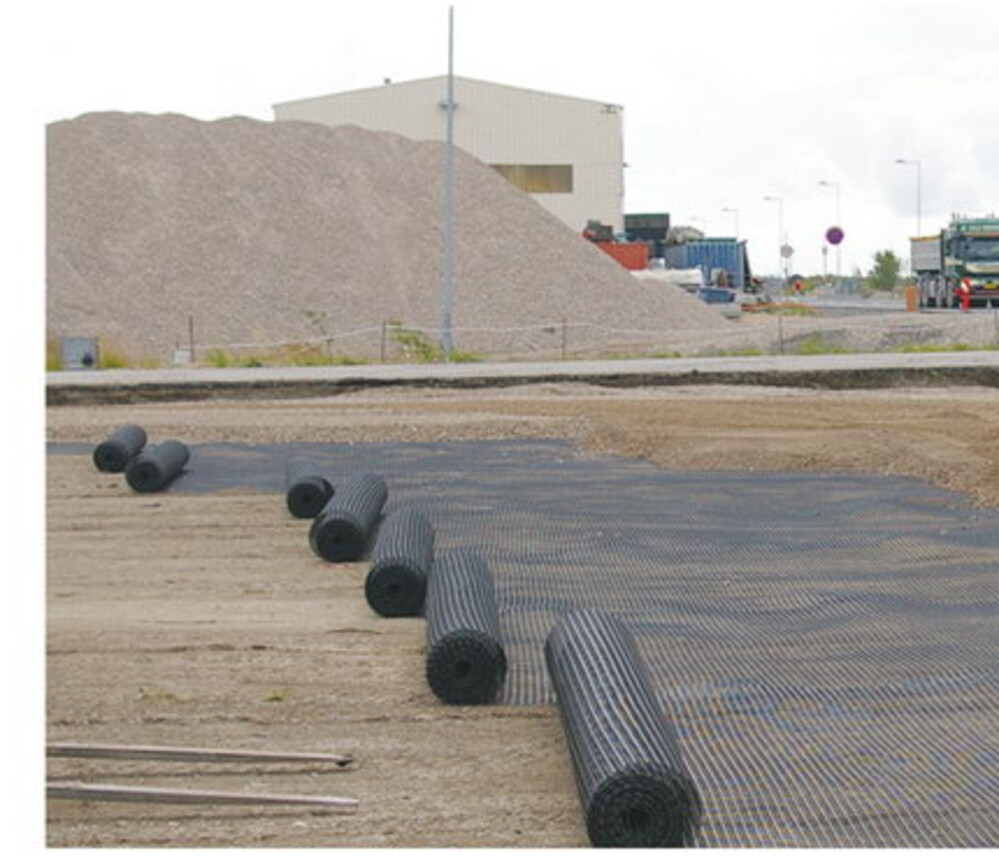
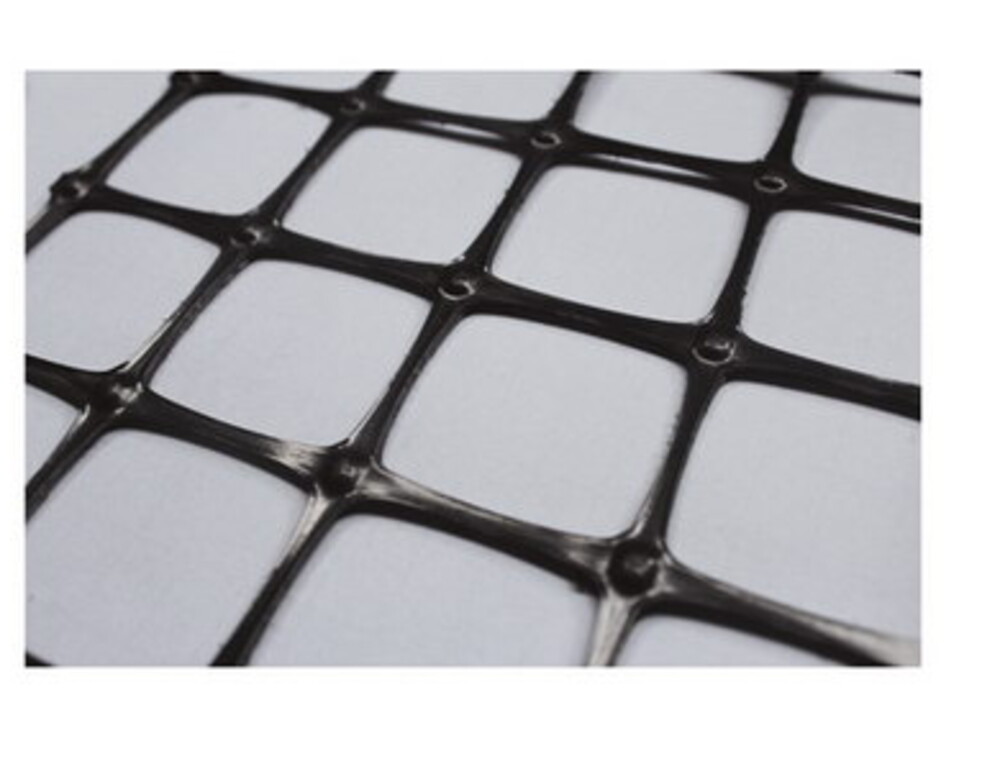
Biaxial PP geogrid
Integrally formed, punched and oriented polypropylene for unbound pavement and platform stabilisation.
Australian pavements · haul roads · working platforms
Kontain extruded polymeric geogrids confine unbound aggregate, protect weak formations and create options to extend pavement life or optimise granular thickness—supported by local selection, project data and rapid technical response.
Supply across Australia: nominate a grade for pricing or send the site conditions for a fit-for-purpose recommendation. Standalone grids and factory-bonded geotextile composites are available in standard and custom formats.
Technical resources · 6 files
Current product documents are available here. Selection guidance, installation context and full technical detail continue below.
Four current range sheets for biaxial, multi-directional and composite pavement systems.
4 TDSs · Rev 03 · 20 July 2026View data sheets (4) ↓Installation and selection guideExtruded pavement geogridsFormation acceptance, overlaps, first-lift placement, cover, repairs and hold points.
Rev 1.0 · 20 July 2026 · 14 pagesDownload PDF ↓Technical application brochurePavement stabilisation and soft-ground solutionsApplication pathways, selection inputs, installation controls and project support.
Issue 1 · August 2026 · 10 pagesDownload PDF ↓Australian pavement systems
Start with the failure mechanism, not a preferred grid. Kontain matches stiffness, aperture, geotextile backing and roll format to the site conditions, then documents the exact product proposed.
BGTwo-direction aggregate confinement
Integrally formed, punched and oriented polypropylene for unbound pavement and platform stabilisation.
 BGC
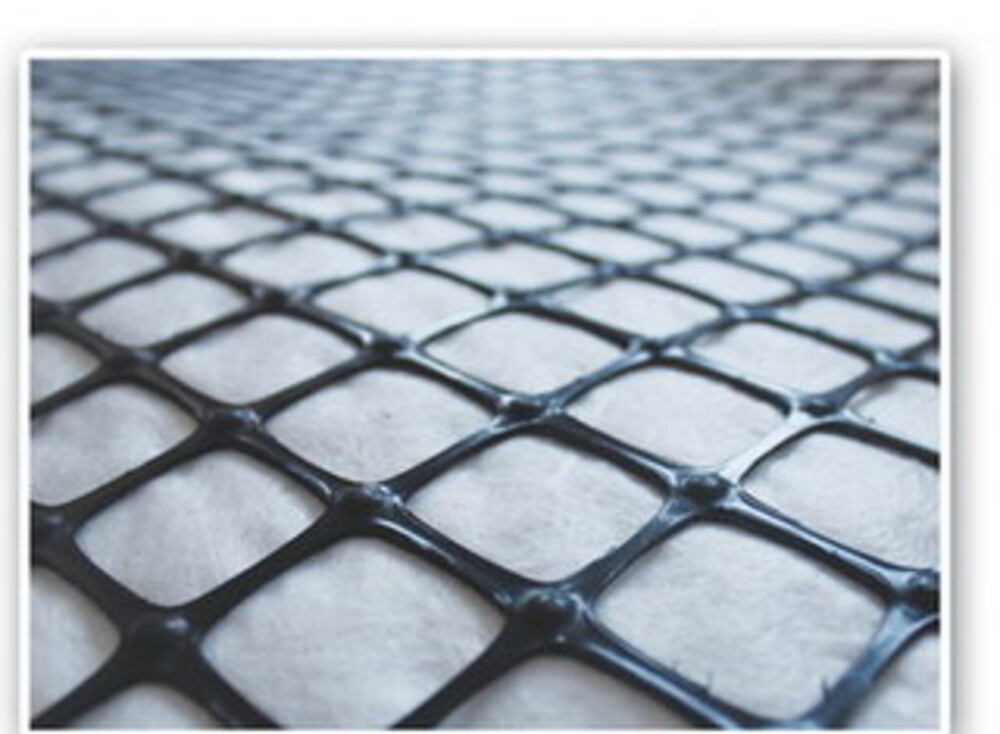
BGCStabilisation + separation + filtration
Biaxial grid factory-bonded to nonwoven geotextile for fine, wet or contamination-prone subgrades.
 TG
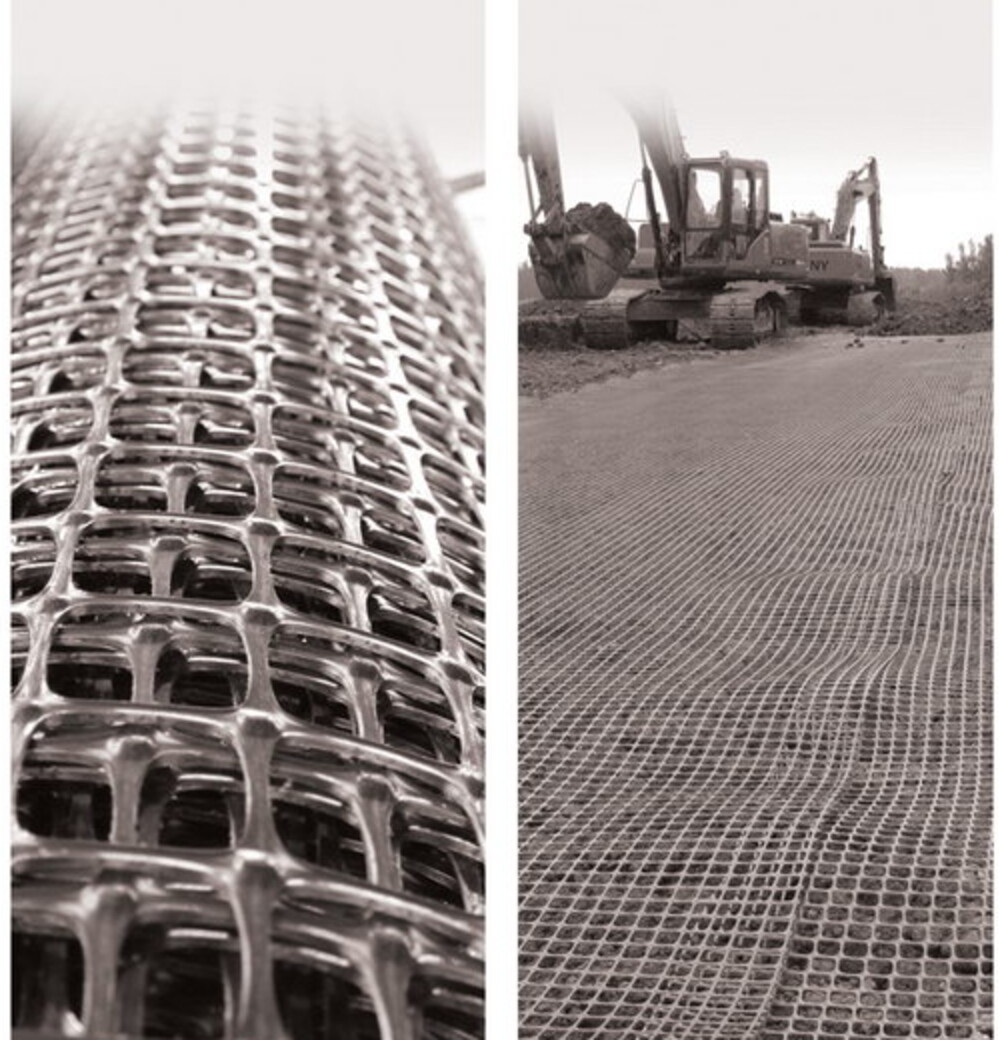
TGMulti-directional aggregate interaction
Radial-stiffness product family for variable traffic directions and multi-directional aggregate interaction.
 TGC
TGCRadial response + separation + filtration
Triaxial grid factory-bonded to a controlled nonwoven geotextile backing for soft, fine-grained or wet formations.
Preliminary system screen
This tool applies Kontain's conservative no-design fallback logic. It retains the full unreinforced pavement thickness and does not claim a structural benefit.
Grid-only is appropriate only where separation and filtration are confirmed unnecessary.
Authority specifications, approved drawings and project-specific engineering always take precedence.
Open the wheel-load and traffic-based pavement comparison toolWhere stiff geogrids add value
Mechanically stabilised aggregate can improve constructability and pavement performance, but the benefit assigned in design must match the ground, aggregate, loading and exact grid proposed.
Construction over soft ground
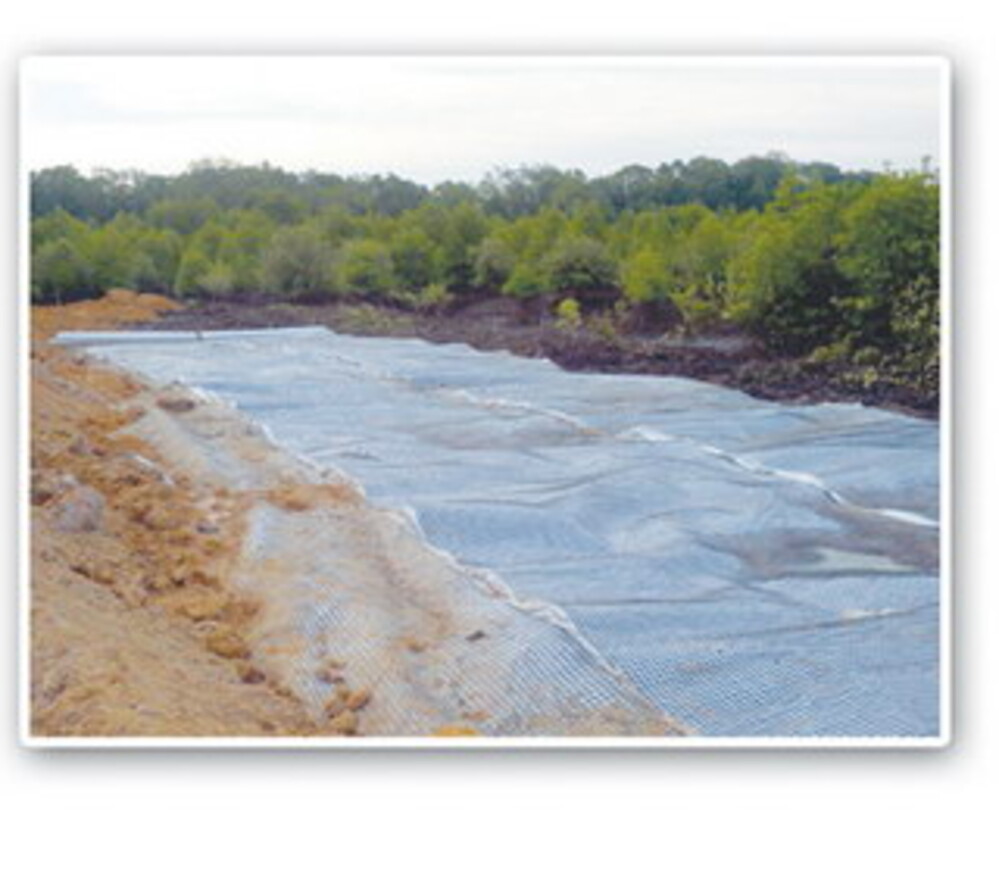
Mechanical interlock confines aggregate, limits lateral movement and reduces intrusion into weak formations so fill can be placed progressively from the covered side.
Retain design thickness
Where permanent deformation governs, stabilising the granular layer can reduce rut development and maintenance demand while retaining the original pavement section.
Retain design performance
A project-specific comparison may support less aggregate for the same performance target when the design method and evidence apply to the supplied grid, aggregate and layer position.
The opportunity is generally strongest where the representative subgrade CBR is 6% or lower. As formation quality improves, the achievable thickness or design-life benefit commonly becomes less pronounced. Thickness reduction and life extension are alternative design pathways and should not be added together.
Request a project reviewSystem decision
A grid restrains aggregate movement. It does not automatically retain subgrade fines, control water or repair loss of bearing support.
Use where the formation is reasonably firm and stable, and filter compatibility confirms that subgrade migration is not a credible mechanism.
Use where mechanical stabilisation and a continuous separator/filter are both required. Place the nonwoven side to subgrade unless the design states otherwise.
Use where the geotextile grade, chemistry, filter criteria or grid elevation must be selected independently.
Technical performance range
Use low-strain response, junction performance, aperture geometry, radial stiffness and the complete grid-geotextile system—not ultimate tensile strength alone.
| Property | Test / data basis | Unit | BG15 | BG20 | BG30 | BG40 |
|---|---|---|---|---|---|---|
| Ultimate tensile strength | ASTM D6637 | kN/m | 15 / 15 | 20 / 20 | 30 / 30 | 40 / 40 |
| Tensile strength at 2% strain | ASTM D6637 | kN/m | 5 / 5 | 7 / 7 | 10.5 / 10.5 | 14 / 14 |
| Tensile strength at 5% strain | ASTM D6637 | kN/m | 10.5 / 10.5 | 14 / 14 | 21 / 21 | 28 / 28 |
| Strain at ultimate strength | ASTM D6637 | % | 13 / 13 | 13 / 13 | 13 / 13 | 13 / 13 |
| Junction efficiency | GRI-GG2 | % | 93 | 93 | 93 | 93 |
| Flexural rigidity | ASTM D7748 | mg-cm | 250,000 | 750,000 | 2,000,000 | 4,800,000 |
| Aperture stability | COE method | m-N/deg | 0.32 | 0.50 | 0.75 | 0.98 |
| Nominal aperture | Nominal | mm | 36 / 36 | 35 / 35 | 34 / 34 | 33 / 33 |
| Typical roll width × length | Nominal | m | 3.95 × 75 | 3.95 × 50 | 3.95 × 50 | 3.95 × 50 |
BG Series: Values are shown machine direction / transverse direction. BG15 is designer-selected; BG20, BG30 and BG40 form Kontain's standard preliminary selection range.
Kontain can nominate the appropriate pavement-grid class for suitable projects and prepare a product compliance schedule for the exact grade and configuration offered. The proposed system is reviewed against the current contract specification before formal submission.
Technical data sheets
Each selectable-text PDF contains the product schedule, selection position, field installation controls and MRTS58 project-compliance pathway.
BG15, BG20, BG30 and BG40.
GT150 and GT200 backing classes.
TG145 to TG295 radial classes.
Radial grid with GT150 or GT200 backing.
Extruded stiff geogrids for pavements, haul roads and working platforms.
Pavement & soft-ground brochure
The latest A4 brochure covers pavement stabilisation, working platforms, weak-subgrade treatment, biaxial and triaxial systems, geocomposites and Kontain's project-direct technical support.
 PDF · 10 PAGES
Pavements, platforms & weak subgrades
Use the brochure for early product selection, project submissions and discussions around aggregate confinement, separation, filtration, constructability and soft-ground performance.
Download latest brochureInstallation controls
Installation is part of the system performance. Most avoidable failures begin with uncontrolled formation, open laps, inadequate cover or plant contact.
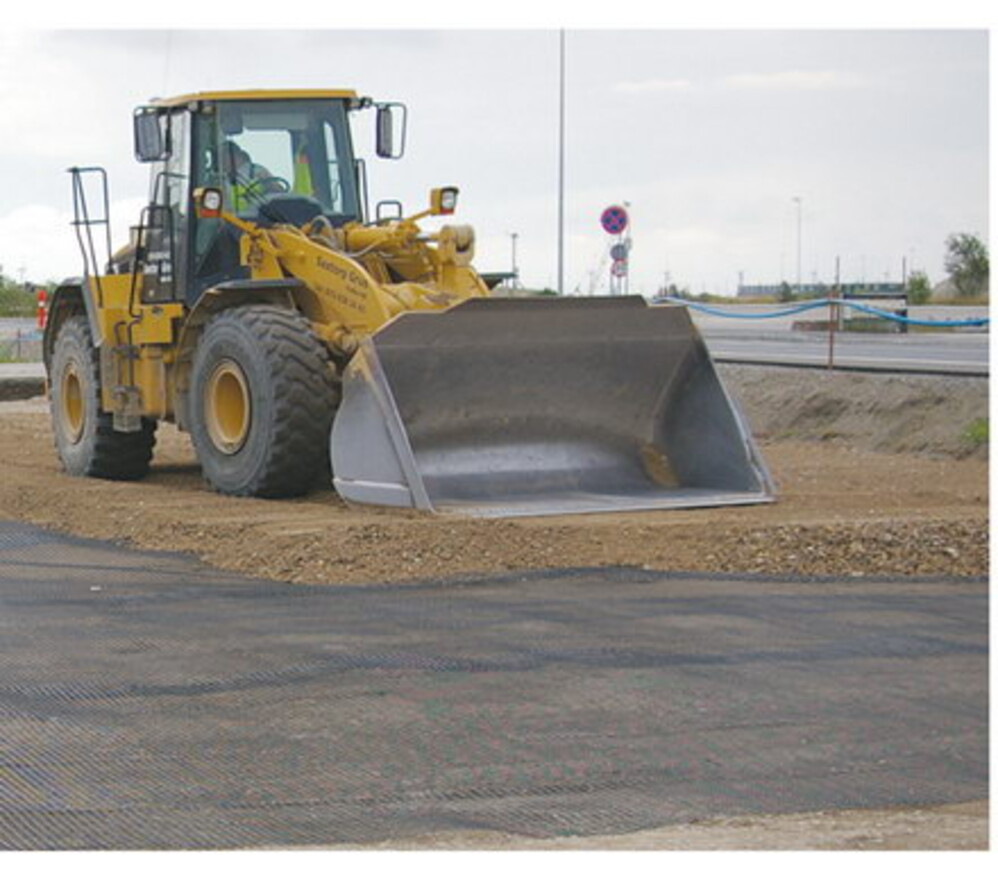
Trim and assess formation. Treat pumping, deep rutting, isolated voids and damaging protrusions before rollout.
Unroll flat and taut. Orient to the plan, shingle in the fill direction and place composite nonwoven to subgrade.
End-dump onto placed fill and spread forward. Do not dump, turn or brake on exposed product.
Maintain cover, use plant suited to the formation, monitor movement and stop if rutting or pumping progresses.
Overlap
First lift
Stop work
Stop if the grid moves, folds, tears, delaminates or becomes exposed—or if progressive rutting, lateral wave, pumping or fines appear.
Formation acceptance, overlaps, first-lift placement, cover, repairs, hold points and two-layer engineering considerations.
Project-direct flexibility
Kontain matches aggregate size, traffic duty, subgrade condition, aperture, stiffness, geotextile backing and roll format to Australian project requirements—then documents exactly what will be supplied.
Review D50, Dmax, grading, angularity and compaction against aperture geometry and construction damage risk.
Select biaxial or radial response around wheel paths, passes, axle load, tyre pressure and granular layer position.
GT150 and GT200 nonwoven backing classes selected for filtration, separation, survivability and site moisture conditions.
Project-specific strength, aperture and roll format, with rapid technical review and programme-focused supply.
Geogrid supply quote
Nominate a product for pricing or send the pavement section, design CBR basis, aggregate grading and Dmax, traffic duty, quantities, location and programme for a fit-for-purpose supply recommendation.
Kontain reviews the proposed product against the project specification before formal submission.
Exact grade, roll format, backing and declared performance.
MRTS58 type or project clause response prepared for the proposed system.
Certificates of analysis, batch traceability and project-specific documentation.