
Lining, Kontainer™ Geobags & custom geosynthetics · Australia-wide | Geotechnical services · South AustraliaTechnical documents (2)

Waterways · sediment control · aquatic weeds

Silt curtains
& weed booms.

Floating barriers selected around the waterway.

Control sediment dispersion during in-water works or contain floating aquatic weeds for targeted management. Kontain can help define the configuration and supply requirements for your site.

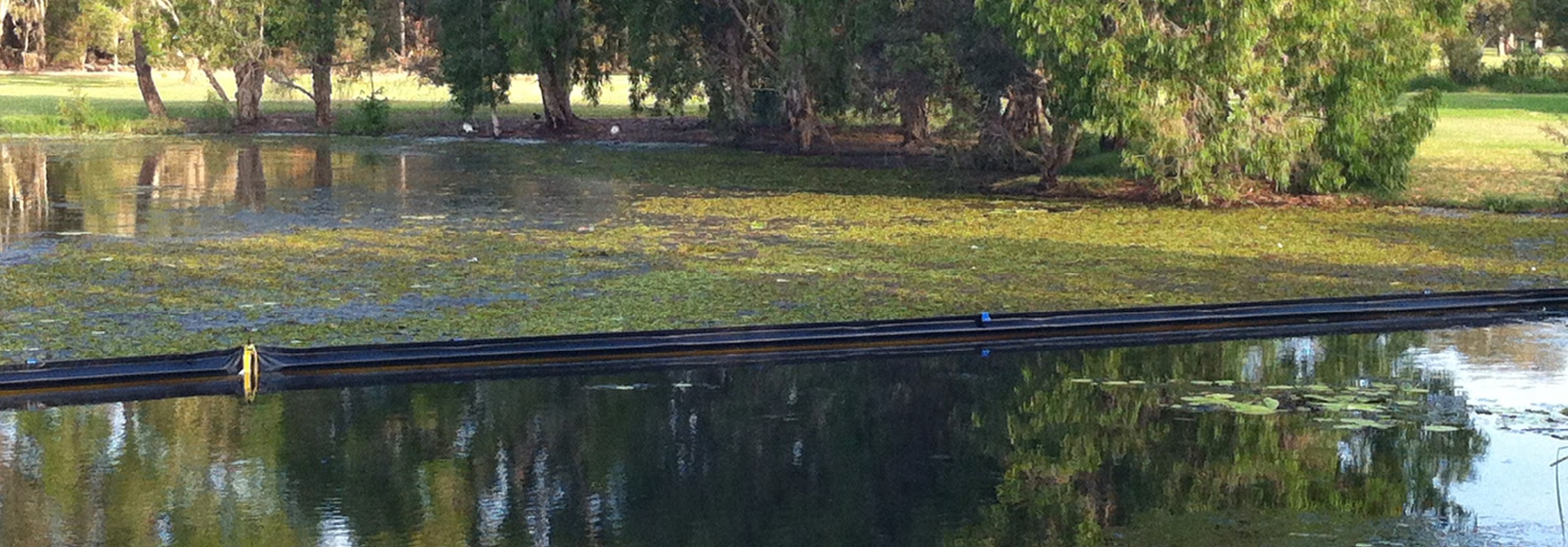
Example weed boom containing floating aquatic weeds in a pond
Weed boom application · example installation from the Kontain brochure

Choose by application

Sediment control and weed containment.

Sediment & turbidity

Silt curtains

Silt curtains, also called turbidity curtains, help limit the spread of suspended sediment and provide a controlled area for settling during dredging, piling, bank works and waterway maintenance.

Skirt depth, flotation, ballast and anchorage are selected for water depth, currents, waves and water-level changes. A curtain is not a watertight dam; its effectiveness depends on the sediment and site conditions.

Project-specific selection

Detailed Kontain silt curtain data sheets will be added as the range develops. Send the site information now to discuss a suitable configuration.
Enquire about silt curtains
Floating aquatic weeds

Weed booms

Connectable floating barriers help contain aquatic weeds and limit plant migration in ponds, lakes, rivers, canals and stormwater channels.

The current Kontain configuration uses a knitted HDPE mesh skirt with a choice of PVC or XR-5® float-chamber material. Temporary or permanent deployment requires a site-specific material and anchorage review.

20 mconnectable sections
300 mmmesh skirt depth
Compare the weed boom options

The weed boom’s open mesh is intended for floating weed containment. Select a silt curtain separately where suspended-sediment control is required.

Kontain Weed Boom

PVC and XR-5® options.

Construction below follows the 20 m configuration in the current Kontain TDS, Issue 1, dated 17 September 2026.

Weed boom component schedule
ComponentPVC optionXR-5® option
Section length20 m; connectable20 m; connectable
Skirt300 mm deep; 430 g/m² yellow knitted HDPE mesh300 mm deep; 430 g/m² yellow knitted HDPE mesh
Float chamber610 g/m² high-visibility yellow PVC1,020 g/m² black XR-5® reinforced EIA
FlotationClosed-cell polyethylene foamClosed-cell polyethylene foam
Ballast6 mm galvanised chain in a PVC pocket6 mm galvanised chain in an XR-5® pocket
ConnectionsAluminium Z-connectors and marine YKK10 skirt zipperAluminium Z-connectors and marine YKK10 skirt zipper
HandlingHandles at 1.5 m centres; 50 mm webbing above and below floatsHandles at 1.5 m centres; 50 mm webbing above and below floats
Anchoring points316 stainless steel eye nut at water level, single side316 stainless steel eye nut at water level, single side
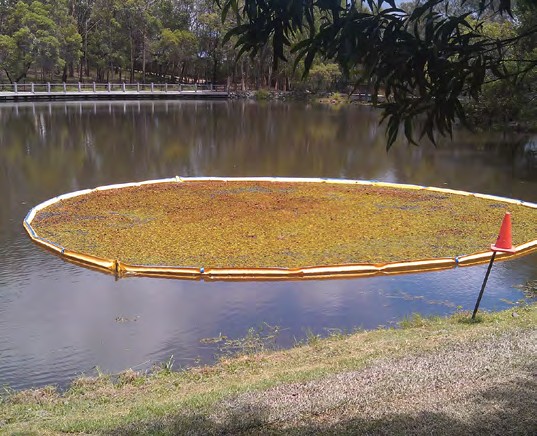
Example yellow weed boom enclosing floating vegetation beside a pond bank
Example floating weed enclosure.

Confirm before fabrication

  • Float profile and freeboard: the TDS records both a 100 × 100 mm standard float and a 140 mm diameter offered profile. Confirm the selected assembly.
  • UV exposure: the PVC information contains different quoted periods, so confirm the selected grade and period. XR-5® is quoted at up to 10 years. These are float-chamber material statements, not whole-boom service-life guarantees or workmanship warranties.
  • XR-5® grade: XR-5® is Seaman Corporation’s fabric-reinforced ethylene interpolymer alloy (EIA). The TDS includes 8130 reference properties; the exact grade still needs confirmation.

Standard 15 m sections, tidal risers, anchor packages and custom dimensions are also available by confirmation. Check the complete assembly against water chemistry, temperature and exposure.

Download the full technical data sheet

Prepare a project enquiry

Start with the waterway and the task.

Send a marked-up plan or site photographs with the following information so we can review the product and supply scope.

  • ApplicationSediment control or aquatic weed containment, location and required deployment period.
  • GeometryBarrier alignment, total length, water depth and water-level variation.
  • ExposureCurrent, waves, wind, vessel movement, water chemistry and temperature.
  • Site accessShore connections, anchoring constraints, installation access, inspection and maintenance arrangements.

Project supply

Send the layout and site conditions.

Discuss your project Email Ben directly