
Scope note. This article provides practical technical guidance for project and operational discussions. It does not replace project-specific investigation, testing, design, certification or the appointed project team.
Introducing Geosynthetics in Practice
This is the first edition of Geosynthetics in Practice, Kontain’s newsletter for civil engineers, installation contractors and asset owners. It will connect geosynthetic research with practical project decisions and the evidence needed to assess them.
Good research can sit unused for years while projects continue with familiar designs. I think AI gives us a practical way to close that gap, provided we use it to examine the evidence and keep engineering judgement at the centre of the decision.
For civil engineers, installation contractors and asset owners, the opportunity is worth taking seriously. Better use of research could mean less material in a pavement, fewer repairs or a liner selected for the conditions it will actually face.
The difficult part is getting from a published finding to a design someone is prepared to approve.
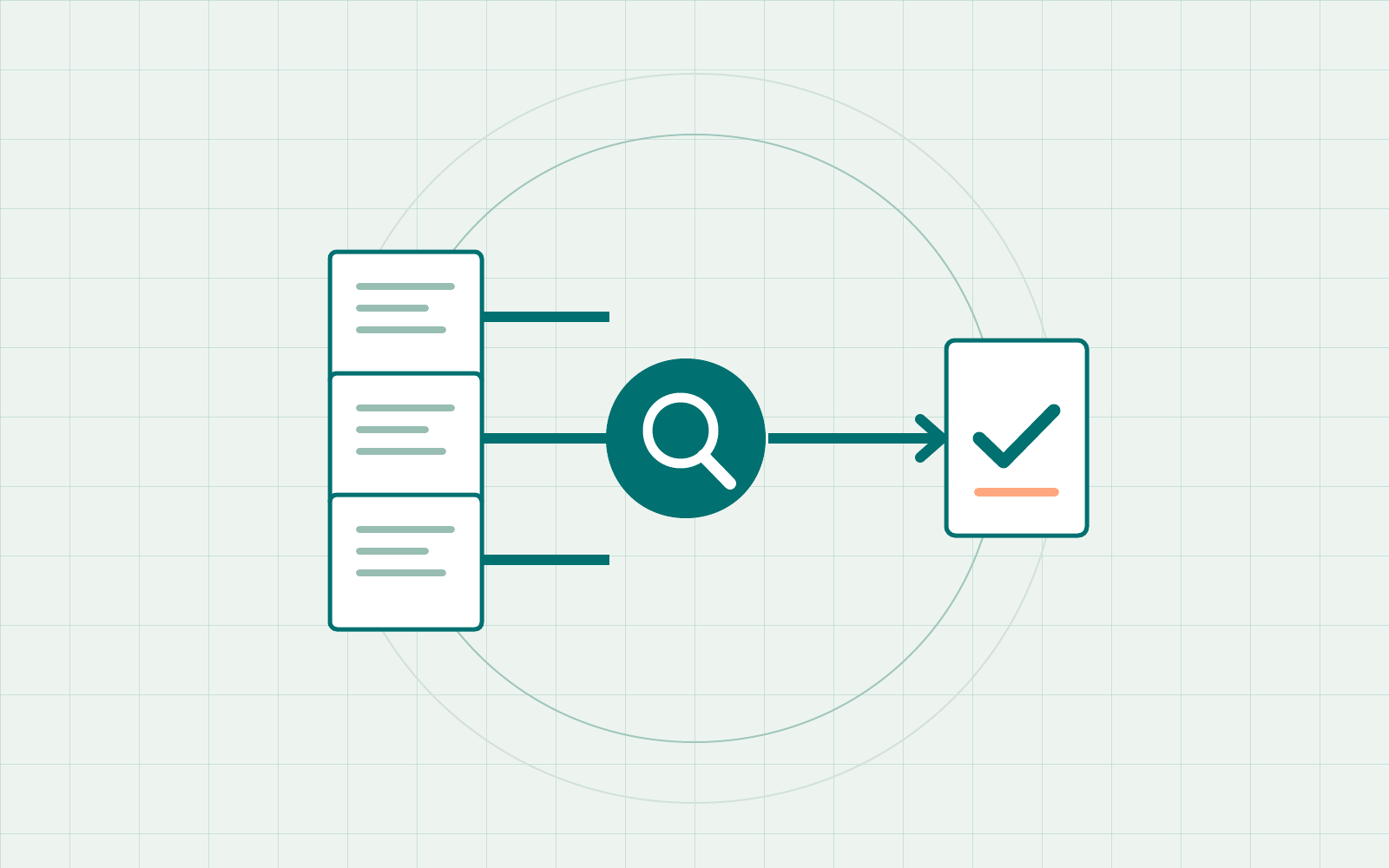
AI can help turn scattered papers and test reports into a traceable comparison of a proposed design, its alternatives and the remaining uncertainties. That is the role I think we should be exploring.
Why good research struggles to reach designs
In my view, Australian design and procurement can be conservative. There are understandable reasons for that. The designer needs to know whether a finding applies to the site, how the system will be constructed and who accepts the remaining uncertainty.
A paper showing a benefit does not automatically provide a design method. A laboratory result may need field validation. A successful field trial may involve different soils, loading or materials. The proposed method must also satisfy the project's contractual and regulatory requirements.
Standards and agency guidance provide an essential common basis, but they cannot answer every question raised by research. The absence of a method from familiar guidance should prompt a proper assessment of the evidence and the available approval route.
A familiar design also carries risk. Cracking and recurring maintenance are consequences we should include when assessing whether a change is justified.
Suppliers have a role here too. We need to make the connection between the research, the product being supplied and the project conditions clear. Confusing terminology and selective results make a designer's job harder.
Geogrids and reactive clay pavements
Geosynthetic stabilisation over reactive clay is a useful example because there is long-term field evidence to consider.
Roodi and Zornberg's 2020 study assessed 32 roadway test sections in Texas after nine years of wet and dry seasons. Sections with geosynthetic-stabilised bases showed substantially better performance against longitudinal cracking than sections without geosynthetic stabilisation. The trial included two geogrids and a geotextile, so its findings should not be treated as proof that every geogrid will perform equally. [1]
An Australian full-scale trial reported in 2023, drawing on its first three years of monitoring, also found improved bearing performance and early evidence of better crack control in reinforced sections over a soft, expansive subgrade. [2]
That gives designers a credible basis to investigate the option. Fewer cracks could help preserve the pavement seal and reduce opportunities for water ingress, with potential maintenance benefits. Those outcomes still need to be assessed for the particular pavement.
Crack mitigation and pavement thickness reduction are separate design questions. Evidence for one does not automatically justify the other. Any thickness reduction needs an applicable, validated design method, suitable product data and acceptance through the project's approval process.
GCLs and the importance of test conditions
Geosynthetic clay liners show why careful research interpretation matters. Modifying the bentonite with a polymer and adding a polymer coating to the liner are different approaches.
A 2015 laboratory study found that polymer-enhanced bentonite slowed the development of downslope erosion features. In the same study, an upward-facing polypropylene coating prevented those features during the imposed test cycles by stopping water entering the bentonite. [3]
There are also limits to polymer enhancement. A 2020 study found less desiccation cracking in the tested polymer-enhanced GCL at 40 degrees Celsius, but that advantage disappeared at higher temperatures. Its hydraulic performance after desiccation also depended on the liquid used for rehydration and permeation. [4]
The studies point to different strengths and limitations. Selection needs to follow the exposure conditions and failure mechanism being addressed. Moisture retention, cracking and erosion resistance should be compared using evidence for the actual candidate products.
Where an alternative meets the required performance at a lower installed cost, it deserves consideration. The comparison needs to include hydration, temperature, liquid chemistry, confinement and installation conditions.
Liner selection beyond the purchase price
HDPE geomembranes provide another reason to look beyond the lowest material rate.
Rowe and colleagues compared five textured geomembranes made from the same nominal resin and found substantial differences in their initial properties and antioxidant depletion rates under the tested exposures. [5]
That matters when selecting for a long design life. Antioxidant depletion is only one stage of degradation, so its projected timing must not be presented as the liner's complete service life.
A small purchase saving can be poor value if the selected material has inadequate durability for the application. Owners need to compare installed cost, expected performance under the exposure conditions and the consequences of repair or replacement. Material price alone cannot answer that question.
A practical role for AI
I would use AI to help prepare a design evidence brief that another engineer can check. That means giving it the actual papers, test reports and project requirements, and asking it to work through a defined question.
For a geogrid pavement proposal, the brief should cover:
- The problem being addressed, such as traffic deformation or cracking caused by seasonal soil movement.
- The measured results, including control sections, test duration and the products used.
- How closely the soil, aggregate, loading and climate match the proposed project.
- Conflicting findings and conditions where the approach may be ineffective.
- The design checks, construction controls and further testing needed before adoption.
- The approval route and the cost comparison, including uncertainty in future maintenance.
Every consequential finding should point back to a verifiable passage, figure or table. The engineer should check those sources and independently verify calculations. Several papers reporting the same trial should not be counted as several independent demonstrations.
This is where I see AI being useful: helping assemble and interrogate the evidence so engineers can spend more time evaluating its relevance.
There is a real limitation. Generative AI can produce false information and invented citations, as NIST's guidance explains. [6] A confident answer is not a substitute for checking the paper. AI cannot supply missing field evidence or take responsibility for the design.
Making a better design easier to approve
Research adoption becomes more practical when the proposed change is defined clearly. What benefit is expected? What uncertainty remains? What evidence would change the decision?
The scale of validation should reflect the consequence of failure. A monitored trial may help resolve uncertainty for a suitable pavement application. A containment system with serious environmental consequences will require a stronger demonstration of performance and the relevant approvals.
Design responsibility and acceptance of residual risk need to be explicit. Using AI does not change those responsibilities. It can help make the basis of the decision easier to inspect.
Through Kontain, I have a commercial interest in geosynthetic supply. I also think suppliers need to help designers understand where a product is appropriate and where it is not.
That is what I want this newsletter to contribute: a practical connection between research and project decisions, with enough detail for engineers to challenge the conclusions.
For the next design review, I would start with one familiar assumption. Gather the evidence for retaining it, assess a credible alternative and document the comparison. AI can help with that work. The engineering decision remains ours.
Research and references
- [1] Roodi and Zornberg 2020. Long Term Field Evaluation of a Geosynthetic Stabilized Roadway Founded on Expansive Clays. Journal of Geotechnical and Geoenvironmental Engineering 146(4) 05020001.
- [2] Shahkolahi and colleagues 2023. Full Scale Field Study on Performance of Geogrid Stabilised Pavement on Soft and Expansive Subgrade. 14th Australia and New Zealand Conference on Geomechanics.
- [3] Ashe and colleagues 2015. Laboratory Study of Downslope Erosion for 10 Different GCLs. Journal of Geotechnical and Geoenvironmental Engineering 141(1) 04014079.
- [4] Yu and colleagues 2020. Effect of Added Polymer on the Desiccation and Healing of a Geosynthetic Clay Liner Subject to Thermal Gradients. Geotextiles and Geomembranes 48(6) 928 to 939.
- [5] Rowe and colleagues 2020. An Approach to High Density Polyethylene HDPE Geomembrane Selection for Challenging Design Requirements. Canadian Geotechnical Journal 57(10) 1550 to 1565.
- [6] NIST 2024. Artificial Intelligence Risk Management Framework Generative Artificial Intelligence Profile. NIST AI 600 1 Section 2.2 Confabulation.

Ben Lewis
Founder & Technical Lead, Kontain. Technical geosynthetic selection and project-direct supply for Australian civil, mining, water and waste infrastructure.
About Kontain